
Most vibe coding platforms don’t care if you build a usable app; they make money when you buy AI tokens.
Their interfaces are DESIGNED to encourage you to keep prompting and spending more.
Which is why using DreamFlow was a breath of fresh air: It doesn’t want us to just vibe code an MVP.
To be clear, it’s definitely a vibe coding tool, specifically one that specializes in mobile apps.
In addition to that, it WANTS users to get better and it’s designed for users who go past casual prompting.
Here’s our argument for why it should be a serious consideration for basically anyone looking to vibe code a mobile app.
UI Prioritizes App Building Over Prompting
This is the main reason we love DreamFlow by a country mile, and instead of telling you, let us show you.
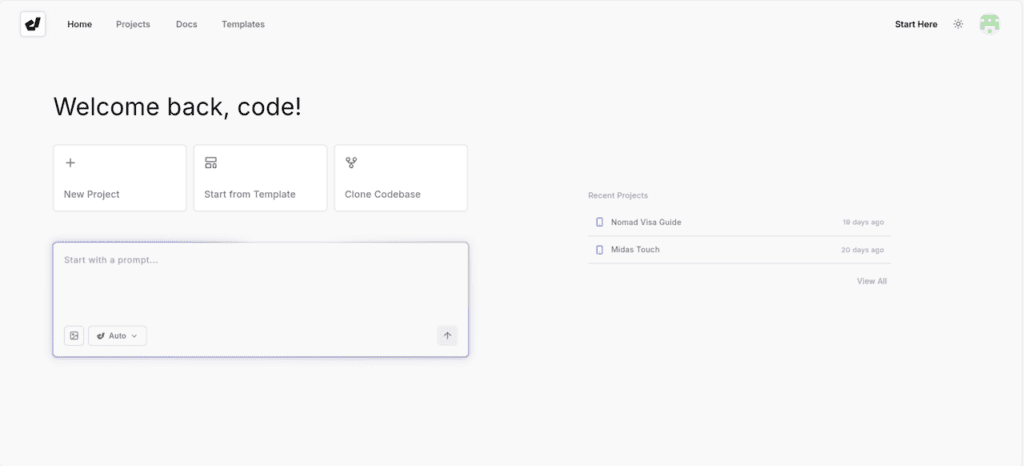
Let’s see what Lovable’s app builder interface looks like.
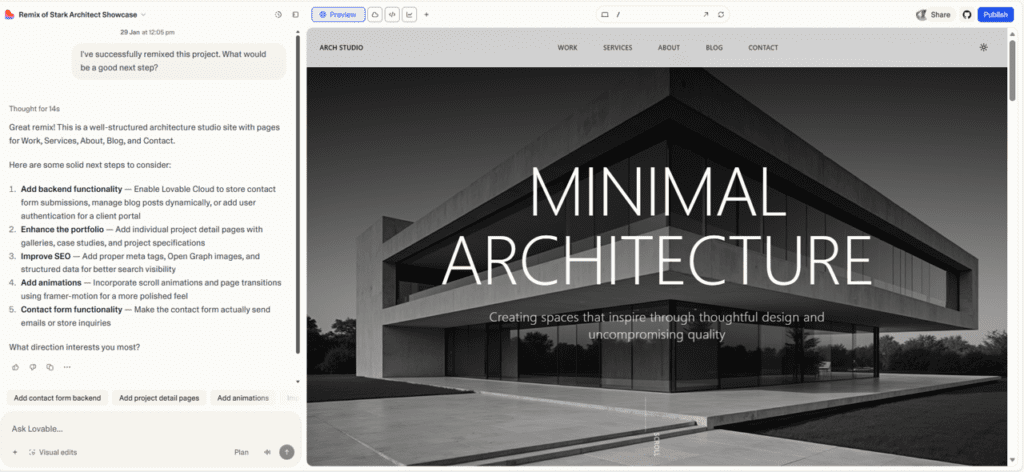
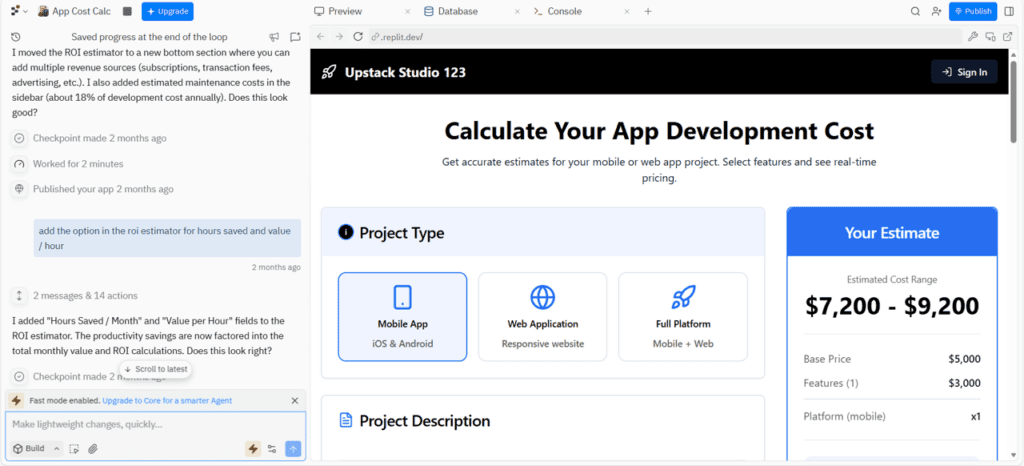
Now let’s see what Replit’s app builder interface looks like.
Now let’s see Bolt’s.
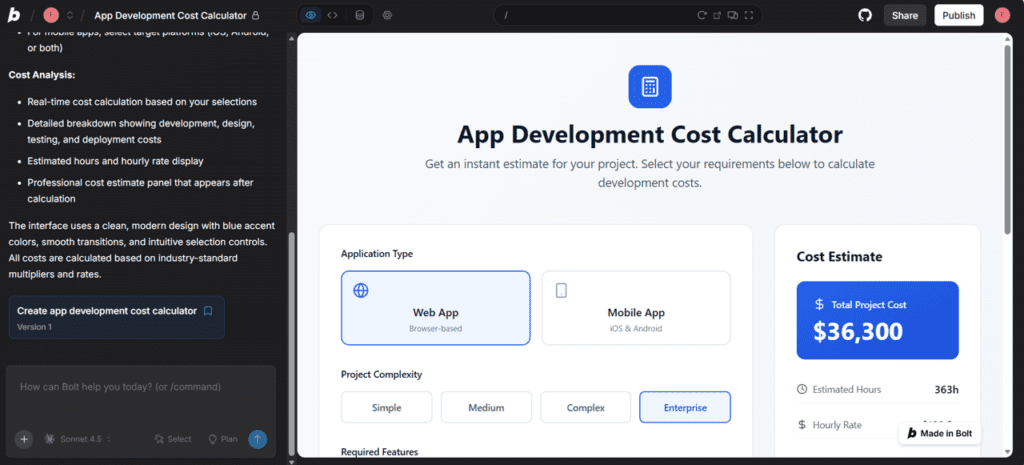
They’re all the same, and not in a good way!
Most vibe coding tools are designed to make users completely dependent on AI for everything…forever.
Not just the coding. EVERYTHING.
Sure, that’s the appeal, but there’s a hard limit to how far one can go this way.
Now let’s see DreamFlow’s UI.
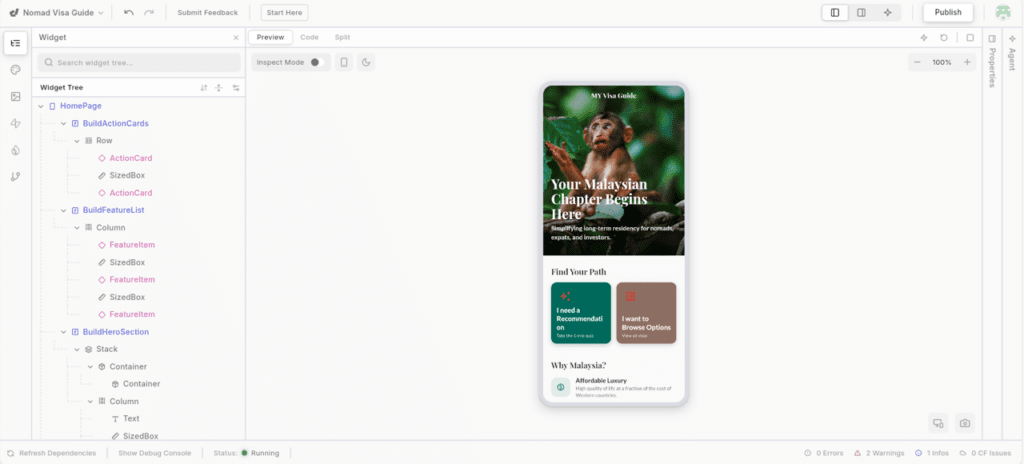
DreamFlow’s UI focuses first on foremost the widget tree to break down how on-screen elements are structured.
The platform then prioritizes a property panel so users can edit individual widget parameters themselves.
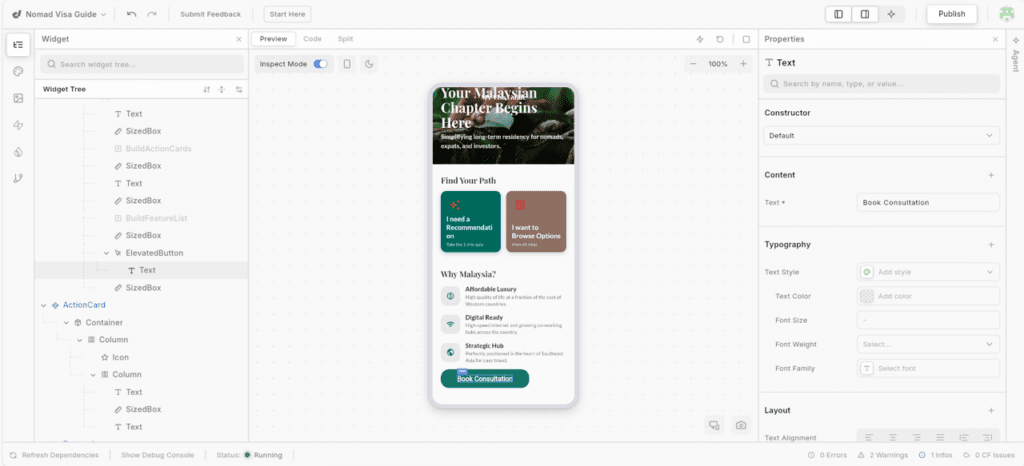
The AI is positioned as an additional tool users can pull up manually as and when required.
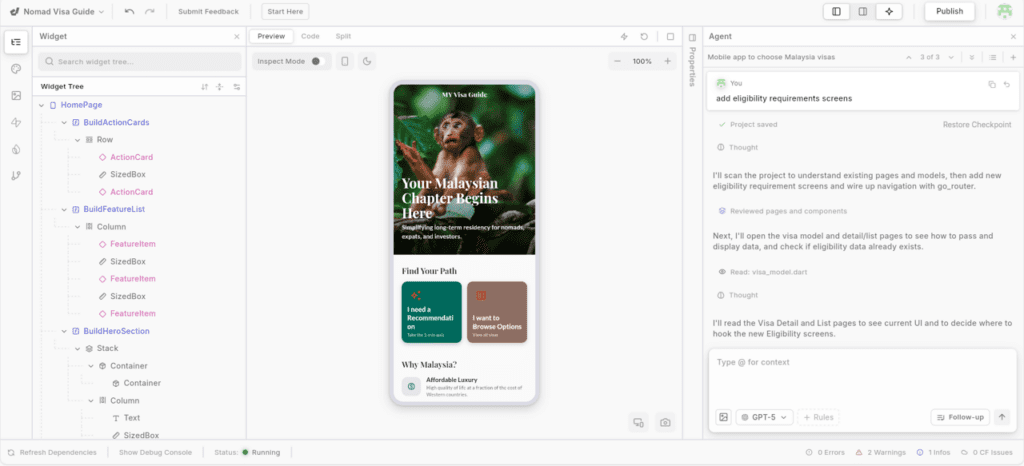
This is how software developers use AI to build apps too–and it’s why DreamFlow’s approach to non-technical vibe coding is such a breath of fresh air.
Again, we want to clarify that if you just want to use the AI to prompt, you can too!
DreamFlow basically gives users all the convenience of a vibe coding platform but doesn’t actively try to pigeonhole them like basically every other option.
App Store Publishing Support
Compared to the web apps, publishing on Apple and Google app stores is much harder.
As one of the few vibe coding platforms specializing in mobile apps, DreamFlow allows users to publish to app stores directly from its builder interface (already more than most)
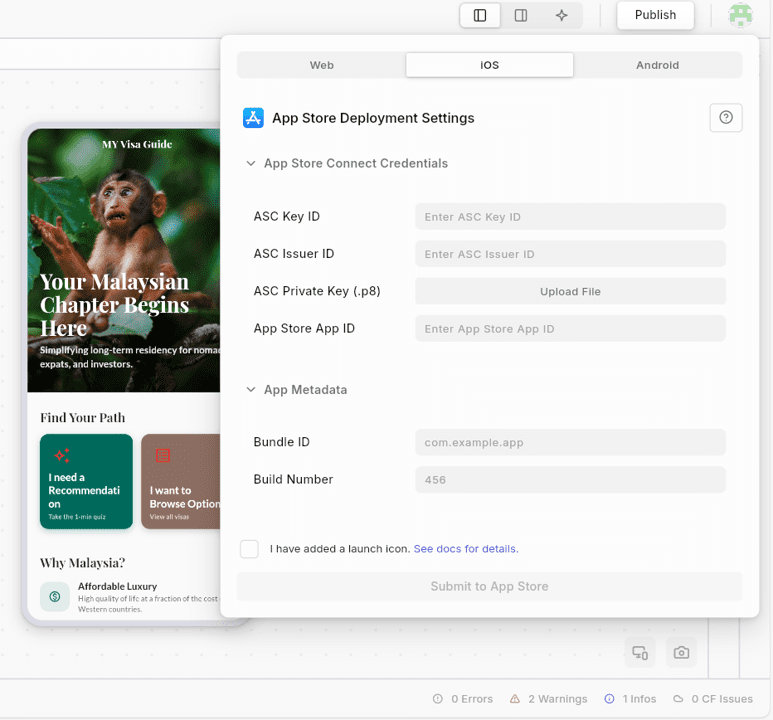
In addition to that, it has what we think is the most complete walkthrough on how to get your app compliant with app store requirements:
In fact, their entire series of documentation deserves praise.
Actively Discourages Casual Vibe Coding
While DreamFlow is just as guilty of overpromising what non-techs can achieve with vibe coding, it also (rightly) tells them they could be so much more.
Here’s a video by their Global Head of Education & Training John Higgins we absolutely love.
It’s six minutes of John explaining how to make the most of DreamFlow – and it’s all about learning to think like a developer and understand basic software development so you can give better prompts to DreamFlow’s AI agent.
Again, this is kind of how actual developers approach AI assistance in software development, so good on DreamFlow for going against the grain.
And this is when we have to talk about its big brother, FlutterFlow.
FlutterFlow and DreamFlow
Super brief history: Before vibe coding, there was no code; vibe coding without AI prompting.
The same way the rise of vibe coding gave birth to DreamFlow, FlutterFlow was founded in response to the demand for no-code app development.
With no code app builders one of the main ways to separate them was:
- easy to learn but offered less control, customization, and complexity, OR
- lots of control, customization, and complexity, but with a steeper learning curve
From the start, FlutterFlow was firmly in the second camp.
It was meant for non-coders who were serious about building software products. And for those who get serious, DreamFlow is the FlutterFlow of vibe coding.
If you have a custom software project that needs rescuing, get in touch and we’d be happy to help! Also, consider joining our mailing list for a one-stop resource on everything from SaaS validation to execution and promotion. Get a nifty list of questions to ask app developers when you sign up!
App Developer Interview Questions Template
Download this template now so you know exactly what to ask App Development Agencies! Let us know where should we send it through the form below.